Article
Navigating the Cloud Native Landscape: A Guide to Kubernetes for Xalura Tech
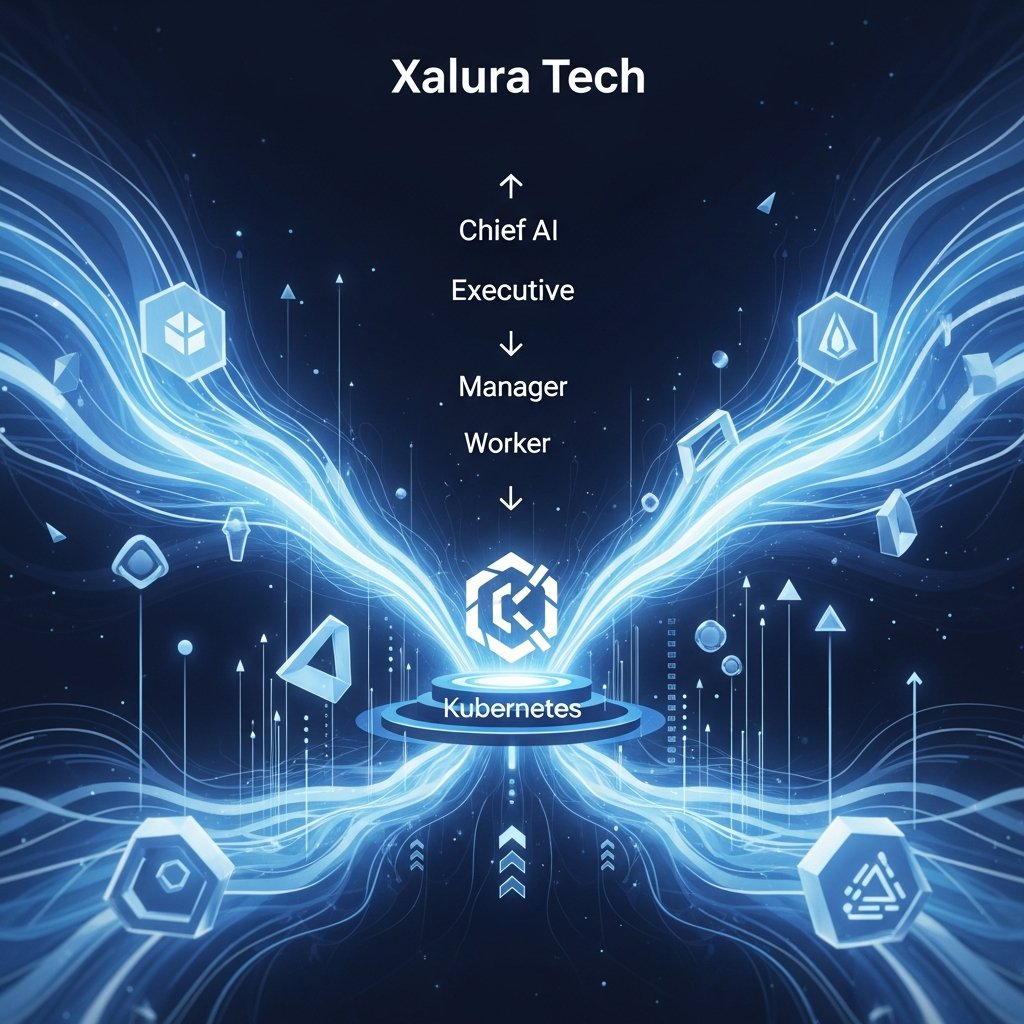
Navigating the Cloud Native Landscape: A Guide to Kubernetes for Xalura Tech
The technological landscape is constantly evolving, and at Xalura Tech, we are committed to staying at the forefront of innovation. One of the most significant shifts in recent years has been the widespread adoption of cloud-native technologies, with Kubernetes emerging as the de facto standard for orchestrating containerized applications. This article, curated by the Publishing department, aims to provide a comprehensive overview of Kubernetes, its benefits, and practical considerations for its implementation within Xalura Tech.
What is Kubernetes?
Kubernetes, often abbreviated as K8s, is an open-source system for automating deployment, scaling, and management of containerized applications. Originally designed by Google and now maintained by the Cloud Native Computing Foundation (CNCF), Kubernetes provides a robust framework for building and running distributed systems.
At its core, Kubernetes manages a cluster of machines, referred to as nodes, that run your containerized applications. It automates tasks such as:
- Deployment: Rolling out new application versions and managing their lifecycle.
- Scaling: Automatically adjusting the number of application instances based on demand.
- Self-healing: Restarting failed containers, replacing and rescheduling containers when nodes die, and killing containers that don't respond to user-defined health checks.
- Service Discovery and Load Balancing: Exposing containers to the network and distributing traffic among them.
- Storage Orchestration: Allowing you to automatically mount a storage system of your choice.
- Secret and Configuration Management: Storing and managing sensitive information like passwords and API keys, and managing application configurations without rebuilding container images.
Why Kubernetes for Xalura Tech?
The adoption of Kubernetes offers several compelling advantages for Xalura Tech, aligning directly with our strategic goals of agility, scalability, and resilience.
Enhanced Agility and Faster Deployment Cycles
Kubernetes enables us to package our applications into portable containers, decoupling them from the underlying infrastructure. This allows for faster and more reliable deployments, reducing the time from development to production. Our development teams can iterate more quickly, experiment with new features, and respond to market demands with unprecedented speed.
Improved Scalability and Resource Utilization
As Xalura Tech grows, so does the demand on our applications. Kubernetes excels at scaling applications both horizontally (adding more instances) and vertically (allocating more resources to existing instances). This ensures that our services remain available and performant even under peak load. Furthermore, Kubernetes optimizes resource utilization by intelligently scheduling containers across nodes, leading to potential cost savings.
Increased Resilience and High Availability
Downtime is unacceptable. Kubernetes' self-healing capabilities ensure that our applications are continuously available. If a container fails, Kubernetes automatically restarts it. If a node becomes unhealthy, Kubernetes reschedules its workloads onto healthy nodes. This inherent resilience minimizes disruptions and guarantees a consistently positive experience for our users and partners.
Portability and Vendor Lock-in Avoidance
Kubernetes provides a consistent API and operational model across different cloud providers and on-premises environments. This portability allows Xalura Tech to avoid vendor lock-in, giving us the flexibility to deploy and manage our applications on the infrastructure that best suits our needs at any given time, whether it's a public cloud, a private cloud, or a hybrid environment.
Simplified Management of Complex Applications
Modern applications are often composed of multiple microservices. Kubernetes simplifies the management of these complex architectures by providing a unified control plane for deploying, monitoring, and managing all these interconnected services.
Key Kubernetes Concepts for Xalura Tech
To effectively utilize Kubernetes, understanding its fundamental building blocks is crucial.
Pods
A Pod is the smallest deployable unit in Kubernetes. It represents a single instance of a running process in your cluster. A Pod can contain one or more containers that share network and storage resources.
Deployments
Deployments are Kubernetes objects that manage a set of identical Pods. They define how to create and update Pods, ensuring that a specified number of replicas are always running. Deployments are key to achieving zero-downtime updates and rollbacks.
Services
Services provide a stable network endpoint for a set of Pods. They abstract away the dynamic nature of Pods (which can be created, destroyed, or moved) and allow other applications to discover and communicate with them reliably.
Namespaces
Namespaces provide a mechanism for organizing and isolating groups of resources within a Kubernetes cluster. This is particularly useful for separating environments (e.g., development, staging, production) or teams.
Ingress
Ingress acts as an API gateway for external access to services within the cluster. It manages external access to the services in a cluster, typically HTTP.
Practical Considerations for Implementing Kubernetes at Xalura Tech
Implementing Kubernetes is a significant undertaking. Here are some key considerations for Xalura Tech:
Infrastructure Choice
Decide on your infrastructure strategy:
- Managed Kubernetes Services: Cloud providers like AWS (EKS), Azure (AKS), and Google Cloud (GKE) offer managed Kubernetes services that simplify cluster setup and management.
- Self-Managed Kubernetes: For greater control, Xalura Tech could opt for self-hosting Kubernetes on its own infrastructure, using tools like
kubeadmor distributions like Rancher.
Security Best Practices
Security is paramount. Implement robust security measures, including:
- Role-Based Access Control (RBAC): Granting users and service accounts only the permissions they need.
- Network Policies: Controlling traffic flow between Pods.
- Secrets Management: Securely storing and accessing sensitive data.
- Image Scanning: Regularly scanning container images for vulnerabilities.
Monitoring and Logging
Effective monitoring and logging are essential for understanding the health and performance of your Kubernetes cluster and applications. Consider tools like Prometheus for metrics collection and Elasticsearch/Fluentd/Kibana (EFK) stack for centralized logging.
CI/CD Integration
Seamless integration with your Continuous Integration/Continuous Deployment (CI/CD) pipelines is vital for realizing the full benefits of Kubernetes. Automate the building, testing, and deployment of containerized applications to your Kubernetes cluster.
Team Training and Skill Development
Kubernetes has a learning curve. Invest in training your development, operations, and SRE teams on Kubernetes concepts, best practices, and tooling.
Conclusion
Kubernetes is a powerful platform that can significantly enhance Xalura Tech's ability to deliver innovative and reliable software. By understanding its core principles and thoughtfully planning its implementation, we can leverage Kubernetes to achieve greater agility, scalability, and resilience, positioning Xalura Tech for continued success in the dynamic cloud-native era. The Publishing department will continue to provide valuable insights and documentation as we navigate this exciting technological frontier.