Article
AI Ecosystem Mind Map 2026: Navigating the Revolution for Business & Startups
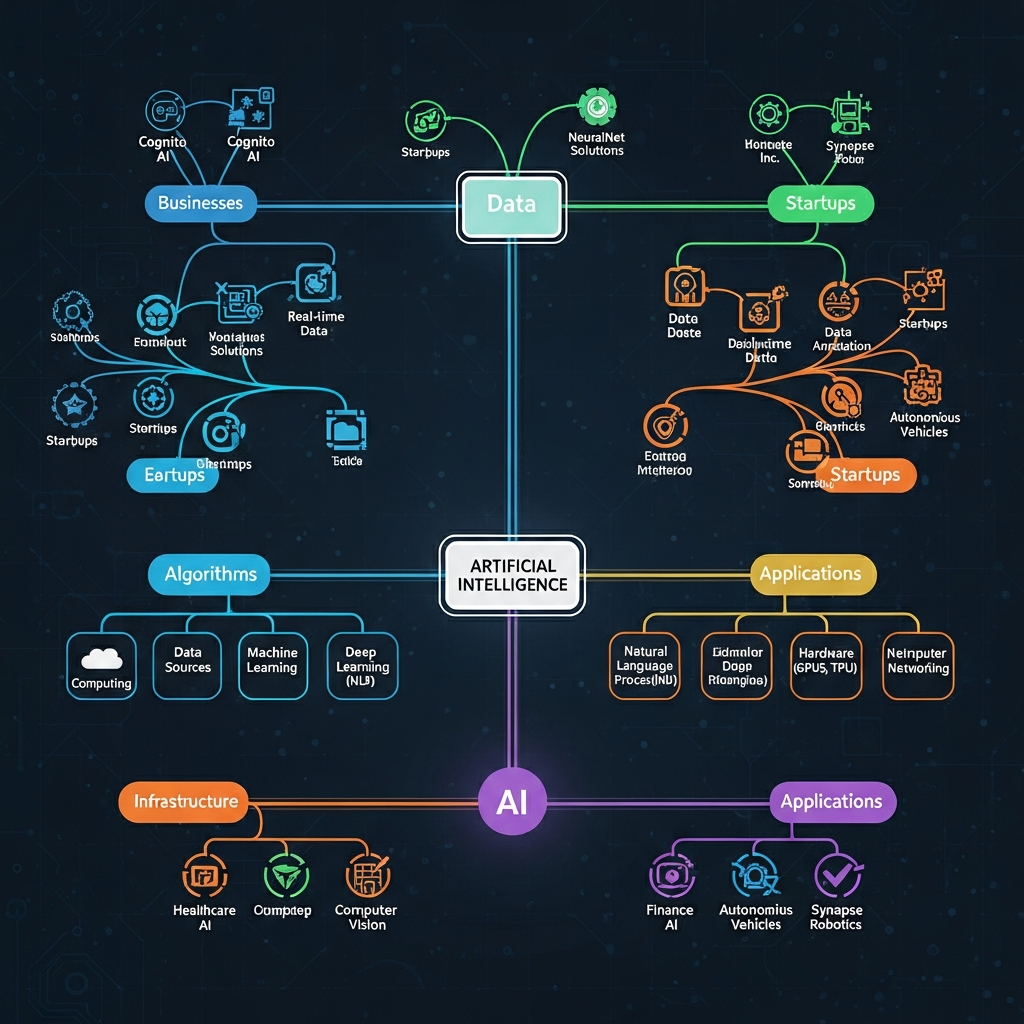
AI Ecosystem Mind Map 2026: Navigating the Revolution for Business & Startups
The artificial intelligence landscape is evolving at an unprecedented pace, and by 2026, its ecosystem will be a complex, interconnected network of technologies, platforms, and applications. For businesses and startups, understanding this evolving AI ecosystem mind map 2026 is not just beneficial—it's critical for strategic planning, innovation, and sustained growth. This guide provides a framework for navigating this dynamic environment, focusing on actionable insights relevant to the business and startup vertical.
The Core Components of the 2026 AI Ecosystem
At its heart, the AI ecosystem is built upon several foundational pillars, each supporting the others in a symbiotic relationship. By 2026, these will be more refined and integrated than ever before.
Data: The Fuel for Intelligence
Data remains the lifeblood of any AI system. By 2026, we will see an even greater emphasis on the quality, accessibility, and ethical sourcing of data. This includes:
- Big Data & Analytics: The sheer volume of data generated will continue to explode, requiring sophisticated tools for collection, storage, and analysis. Startups that can effectively harness and derive insights from this data will gain a significant competitive edge.
- Data Labeling & Annotation: As AI models become more specialized, the need for accurate, domain-specific data labeling will increase. This presents opportunities for specialized service providers.
- Synthetic Data: With increasing privacy concerns and data scarcity in certain domains, the generation and utilization of synthetic data will become a more prominent and accepted practice.
AI Algorithms and Models: The Brains of the Operation
The sophistication and variety of AI algorithms will continue to expand, moving beyond general-purpose models to highly specialized ones.
- Machine Learning (ML) & Deep Learning (DL): These remain the cornerstones, with advancements in areas like reinforcement learning and federated learning enabling new applications.
- Natural Language Processing (NLP): Expect more nuanced and context-aware NLP capabilities, powering sophisticated chatbots, content generation tools, and sentiment analysis platforms.
- Computer Vision: Enhanced image and video analysis will drive innovation in areas from autonomous systems to enhanced customer service through visual analytics.
- Generative AI: The rapid rise of generative AI will continue, impacting content creation, design, and even software development, offering new avenues for product development and marketing.
AI Platforms and Infrastructure: The Backbone
Robust platforms and infrastructure are essential for developing, deploying, and scaling AI solutions.
- Cloud AI Services: Major cloud providers will continue to offer comprehensive suites of AI tools and services, democratizing access to powerful AI capabilities for businesses of all sizes.
- Edge AI: Processing AI at the "edge" (i.e., on devices rather than in the cloud) will become more prevalent, enabling real-time decision-making in applications like IoT devices and autonomous vehicles.
- AI Hardware: Specialized processors (TPUs, GPUs, NPUs) will become more powerful and efficient, driving the performance of AI applications.
Navigating the AI Ecosystem for Business & Startups
Understanding these components is the first step. The next is to strategically position your business or startup within this AI ecosystem mind map 2026.
Identifying Opportunities and Applications
The AI revolution presents a fertile ground for innovation. Consider these areas:
- Customer Experience Enhancement: AI-powered chatbots, personalized recommendations, and predictive customer service can significantly boost customer satisfaction and loyalty. For instance, a retail startup could leverage NLP to analyze customer feedback across social media and support tickets, proactively addressing common pain points.
- Operational Efficiency: Automating repetitive tasks, optimizing supply chains, and improving predictive maintenance can unlock substantial cost savings and productivity gains. A logistics startup might use AI for route optimization, factoring in real-time traffic and weather data to reduce delivery times and fuel consumption.
- Product and Service Innovation: AI can be the core of new products or enhance existing ones. Imagine a fintech startup developing an AI-driven personalized financial advisory service that analyzes spending habits and market trends to offer tailored investment recommendations.
- Data-Driven Decision Making: Moving beyond gut feelings, AI enables businesses to make more informed strategic decisions by identifying patterns and predicting outcomes from vast datasets.
Strategic Considerations for Startups
For startups, navigating the AI ecosystem mind map 2026 requires a focused approach:
- Specialization is Key: While the ecosystem is broad, successful startups often identify a niche where they can offer specialized AI solutions or leverage AI to solve a specific industry problem more effectively than generalist tools.
- Partnerships and Collaborations: No single entity can master the entire AI ecosystem. Building strategic partnerships with data providers, platform vendors, or complementary AI service providers can accelerate development and market access.
- Talent Acquisition: Access to skilled AI talent is paramount. Startups need to develop strategies to attract and retain data scientists, ML engineers, and AI ethicists.
- Ethical AI and Governance: As AI becomes more integrated into business operations, establishing robust ethical guidelines and governance frameworks for AI usage is crucial to maintain trust and mitigate risks.
The Future Outlook: Continuous Evolution
The AI ecosystem mind map 2026 is not a static blueprint but a living document. Continuous learning and adaptation will be essential. Businesses and startups that embrace this dynamic nature, stay informed about emerging trends, and strategically integrate AI into their core operations will be best positioned to thrive in the AI-driven future. By understanding and actively engaging with this evolving ecosystem, you can unlock new levels of innovation and competitive advantage.